The mountain weekend that workers built
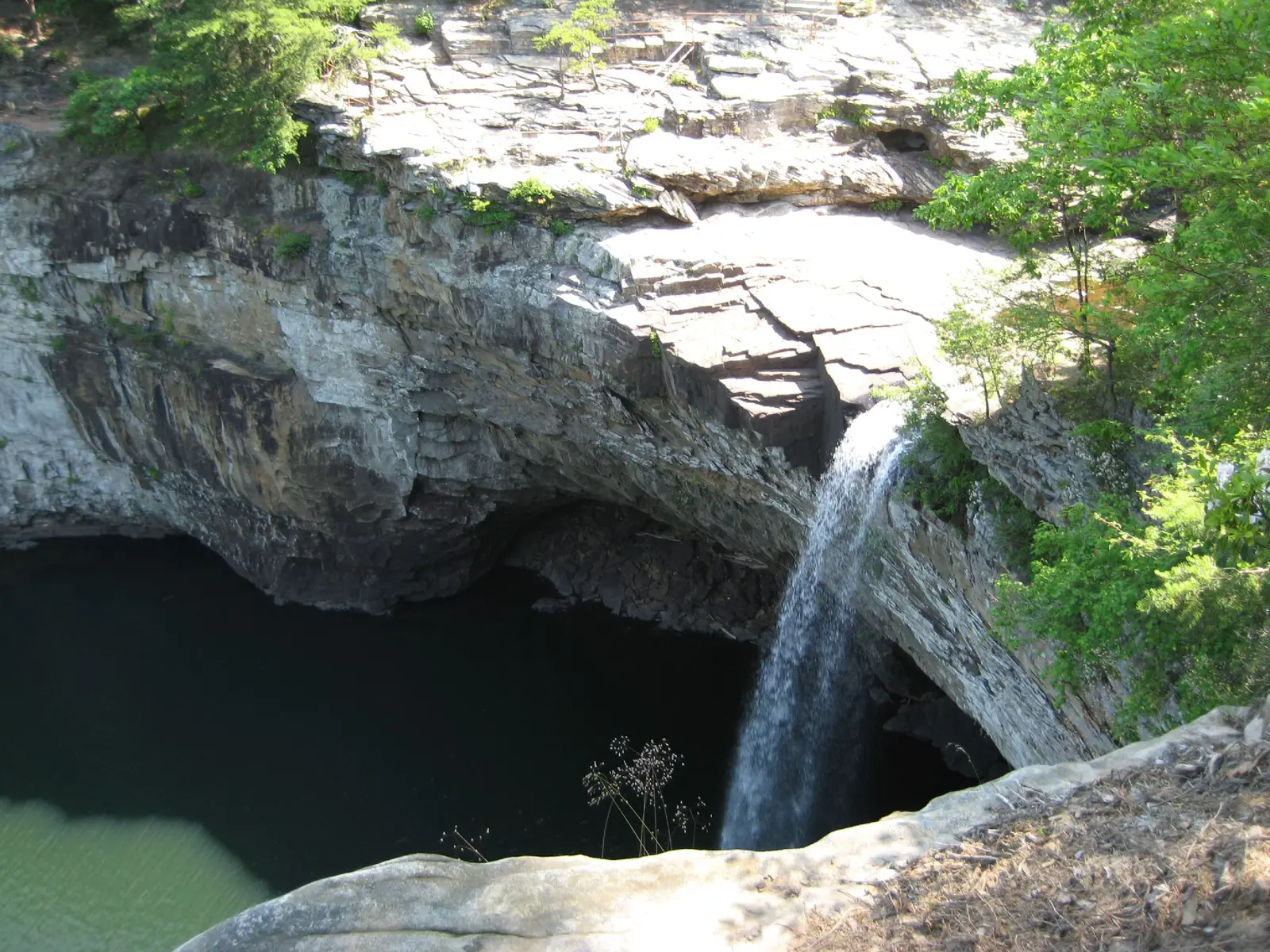
The waterfall did not need a public works program. The roads, buildings and places that let a visitor enjoy this mountain did. At DeSoto, the useful history is under your feet and around the next bend.
On this page
A park made from labor
Alabama State Parks traces the Fort Payne CCC camp to local efforts in 1933. Work on the mountain followed: roads, trails, fences, cabins and public buildings. DeSoto opened in 1939. The native sandstone and timber were building materials, and the young men who shaped them were learning trades while earning income during the Depression. Read the park’s documented CCC history.
I would look at the lodge and a stone shelter before adding another waterfall. Notice the work required to fit public buildings into a rocky landscape. A park can feel natural while depending on substantial design, construction and maintenance. Understanding that changes the visit.
The museum is a small stop with a large purpose
The CCC Museum occupies the original park entrance building on County Road 618. The park lists free admission, with donations accepted, and Saturday opening from noon to 4 p.m. between April and November. Weekdays and winter require an appointment; call 256-845-0051. These are the published arrangements checked October 1, 2026, not a guarantee that a volunteer will be available on your chosen day.
Park staff also offer advance-booked CCC tours. Options include the lodge, stone pavilion, quarry and unfinished bridge. The park says tours can be adapted to a group’s time. That does not make every walking route equally accessible. Ask about the exact route, steps, footing and distance before booking. Confirm museum access and tour options.
Read the connection to the canyon
The National Park Service records the effort to connect DeSoto and the Little River Canyon area into a larger park landscape. Roads and access were central to that ambition. Today’s scenic journey has a planning history as well as a geological one. Read the NPS account.
Make this a compact park afternoon
- Before leaving: confirm that the museum is opening, or arrange the visit. Save the official directions; the museum is not interchangeable with the park’s main facilities.
- First stop: visit the museum and use the exhibits to identify the structures worth noticing.
- Second stop: choose the lodge or stone pavilion. Read the stonework deliberately instead of turning the afternoon into a checklist.
- Optional extension: join an arranged interpretive walk if the group, conditions and daylight support it.
The history also asks a useful present-day question: who maintains the places that make our leisure possible? Respecting closures, staff instructions and fragile structures is part of reading this landscape well.
Three things to look for in the public landscape
- Material: where stone and timber link a building to its setting.
- Access: how paths, roads and gathering spaces make scenery usable by visitors.
- Labor: whose work is named, whose experience is absent and what the museum adds.
These are observation prompts, not claims that every visible structure is original CCC work. Use posted interpretation and the linked park history to distinguish original construction, later changes and restoration.
A broader labor-history afternoon
If work and public investment interest you, pair a later visit with Fort Payne’s manufacturing history. Keep the experiences separate enough to read them: conservation employment and a hosiery industry are related regional histories, not the same institution or workforce.
Historical facts and published visiting arrangements come from Alabama State Parks and the National Park Service links above. Route order and time allowances are Tony’s planning judgment. No trail is represented here as step-free without confirmation.