The place behind the getaway
Mentone makes more sense when you see the layers beneath the cabins and overlooks: mountain geology, Native homeland, resort ambition, education and New Deal public work.
On this page
Read the CCC through DeSoto’s buildings, museum and public landscape.
Read the park’s labor historyCherokee homeland, forced removal and living sovereignty, with a sourced way to read the mountain.
Read the homeland featureA mountain resort before a mountain town
The Town of Mentone traces the community’s late-19th-century development to mineral springs and summer visitors escaping lower-elevation heat. The name Mentone was adopted in the 1880s. That resort identity still echoes in the inns, camps and porch-centered pace of the village.
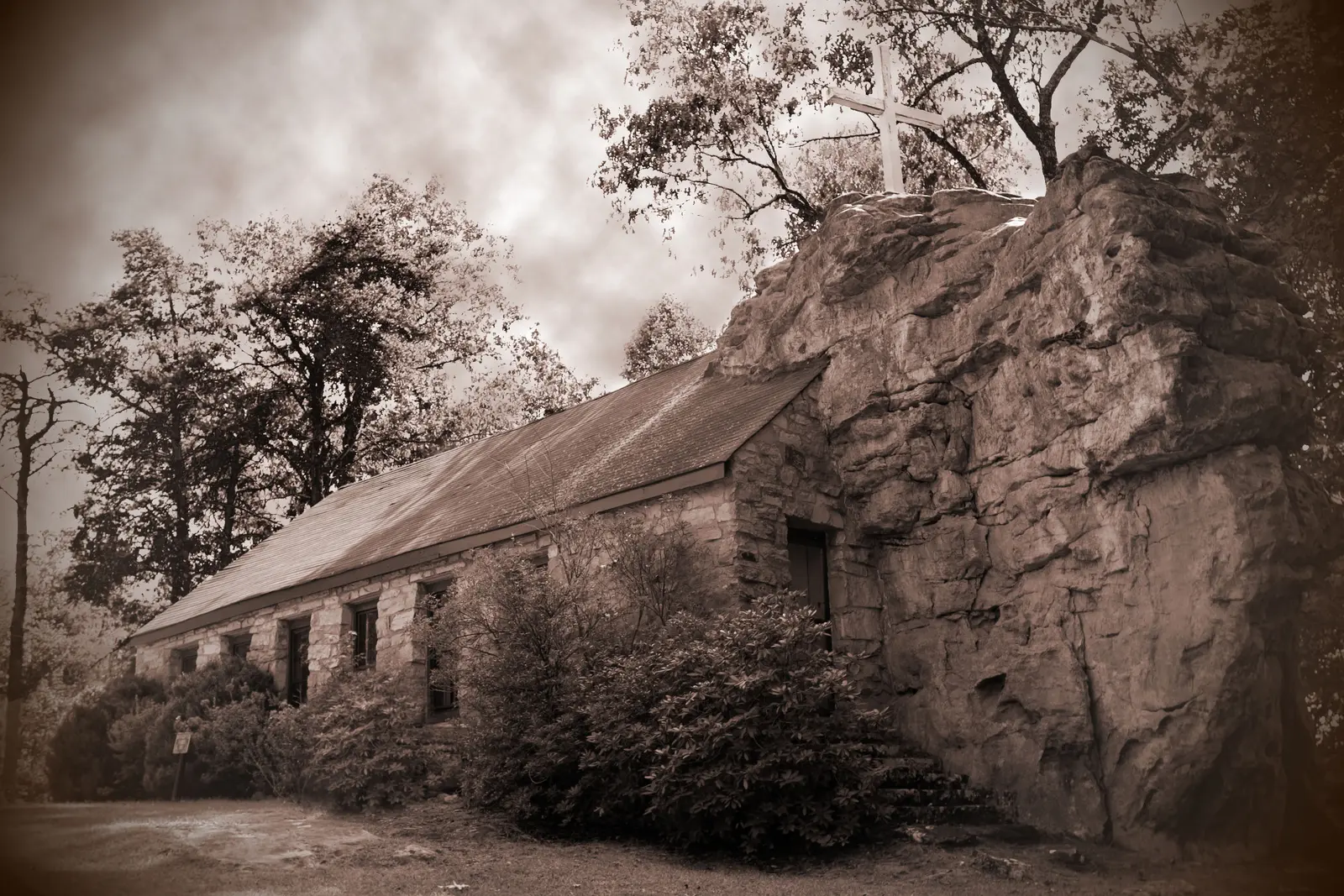
Sallie Howard Memorial Chapel
Milford Howard built the chapel as a memorial to his wife Sallie. Its defining feature is not decoration but geology: a large natural boulder is incorporated into the structure. Visit respectfully—it remains a place with religious and family meaning, not merely a roadside curiosity.
From Moon Lake School to Moon Lake Campus
The old school site now functions as Moon Lake Campus, a civic and cultural gathering place with shops, art, food and an amphitheater. It is a useful example of Mentone’s habit of adapting old community spaces rather than sanding away their history.
The CCC landscape at DeSoto
DeSoto State Park’s trails, stonework and public landscape carry the influence of the Civilian Conservation Corps. The park is not simply scenery that was “discovered”; it is a designed public place shaped by Depression-era labor and conservation policy.
The longer human story
Lookout Mountain is part of Cherokee homeland and history that predates the resort era by centuries. That history deserves more than a romantic legend attached to a viewpoint. The responsible version starts with documented tribal history and the record of removal, and it labels folklore as folklore instead of using it as decoration.
Geology made the itinerary
The sandstone plateau explains the brow views, rock shelters, waterfalls and the unusual fact that Little River flows for much of its length on top of a mountain. Water cutting through that plateau created the canyon; seasonal rainfall then determines whether smaller falls perform or disappear. The landscape is not background—it is the reason the trip must respond to weather and terrain.
Culture is still being made
Mentone’s story did not end with the resort era or the CCC. The reuse of Moon Lake School, the community Arts Center, galleries, workshops and local music keep the town’s culture active rather than embalmed. The artists and makers guide shows where visitors can meet that living layer.
Read one place through more than one layer
At DeSoto, look at the constructed landscape as well as the trees: trails, stonework and lodging reflect labor and public investment. At Moon Lake, ask what a school building’s reuse preserves about community life. At the chapel, give the memorial and active religious use attention before taking the photograph.
Follow the region’s work into Fort Payne
The Depot and Hosiery museums extend the story from mountain leisure into transportation and manufacturing. The Alabama museum adds the career of musicians rooted in the region. Choose one of these histories for a half-day; together they explain why the surrounding town is more than a service stop.
Keep evidence separate from a good story
A local tradition may be worth hearing without being established fact. Ask who recorded it and when. A documented date, a remembered account and an editorial interpretation do different jobs. The deeper history features link their evidence and state what they do not establish; carry that same distinction into a conversation or a visit.