Before the getaway: Cherokee homeland and removal
A cabin weekend can make the mountain feel like a place outside history. It is not. The resort story sits inside a much longer history of homeland, political struggle, forced removal and continuing Cherokee life.
On this page
Start with people, not a legend
The National Park Service places the Trail of Tears in the history of Little River Canyon. In 1838–1839, the United States forcibly removed Cherokee people from their southeastern homeland to Indian Territory. Families endured confinement, difficult journeys, illness and death. This was government action against a people with communities and political institutions, not a natural migration west. Read the preserve’s Trail of Tears account.
I would resist using that history as atmosphere for a viewpoint. The meaningful question is not whether a dramatic story makes the stop more interesting. It is what happened to the people whose homeland became somebody else’s destination.
Removal did not end Cherokee history
The Cherokee Nation describes itself as a sovereign government whose status is recognized through treaty and law. Its own history and contemporary institutions belong in any account of Cherokee life. Read tribal sources alongside the federal park’s interpretation; a government describing removal and a nation describing its own history offer different starting points. Begin with Cherokee Nation.
Keep the language in the present tense where it belongs. Cherokee people are not a vanished population added to an old map. Living nations, citizens, languages and cultural work continue. A responsible guide leaves room for those voices rather than claiming to summarize an entire people in a short travel feature.
Separate the different histories of this landscape
Little River Canyon National Preserve was established in 1992 to protect natural, scenic, recreational and cultural resources. That modern designation, the earlier development of DeSoto and Mentone’s resort growth are distinct chapters. None is the beginning of human life here. Read the preserve’s historical overview.
The distinction matters on the road. A stone park building can explain Depression-era labor. A village building can explain later community life. Neither should be used to stand in for Cherokee history merely because all three happen on the same mountain.
A respectful way to add this to the visit
- Before the drive: read the linked NPS account and a tribal source. Give the history its own attention.
- At the Canyon Center: ask staff what current interpretation or programs address the area’s human history. Confirm opening before going.
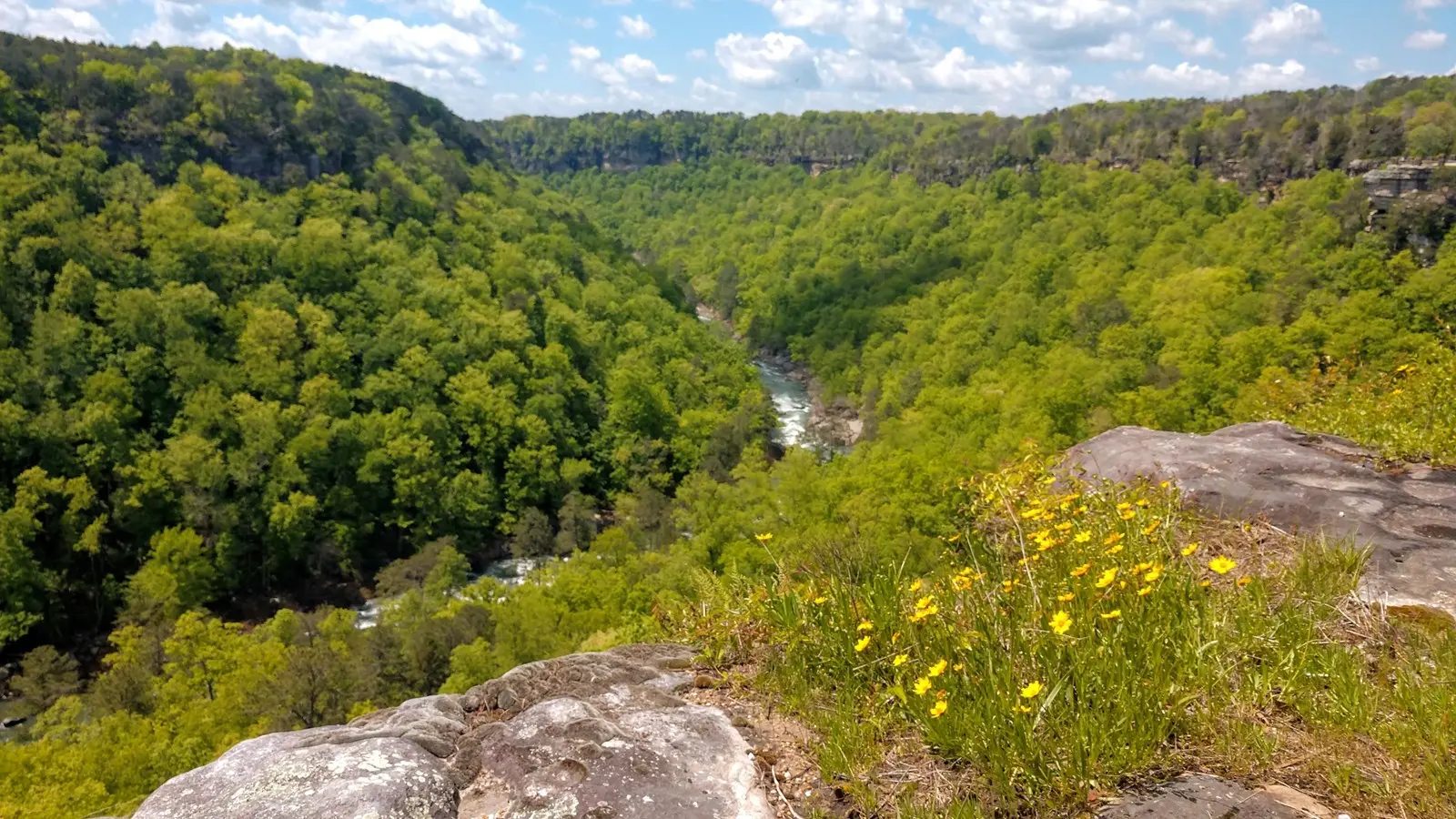
- At a landscape stop: use the view to think about homeland and change, without claiming that the overlook marks a documented event.
- Afterward: continue with tribal-led history rather than ending the story at removal.
Bring the same respect you would want shown to your own family’s history. Photograph posted interpretation where allowed, avoid disturbing or collecting objects, and distinguish documented evidence from local folklore.
A short source-reading exercise
Read the linked federal account and a tribal source. Ask three questions: who is speaking, what period is being described, and what evidence supports a particular local claim? If a source describes removal across the Southeast, do not turn it into proof that an undocumented overlook or road marks a specific event.
What a visitor can responsibly do
Ask the Canyon Center about current interpretation, spend time with the documented history and continue reading after the trip. Do not enter private property, seek artifacts or use an unverified route as a heritage attraction. A careful account of place can be meaningful without converting every history into a new stop on the map.
This guide’s interpretation remains introductory. It should direct readers toward tribal scholarship and documented sites rather than stand in for those voices.
This introduction draws on the NPS preserve history, Trail of Tears interpretation and Cherokee Nation. The suggested reading sequence is Tony’s editorial judgment. It does not replace tribal scholarship or a documented heritage-site guide.